The real reason glasses come off
Ask any crew why safety glasses end up on top of a hard hat instead of over the eyes and you'll hear the same answer: fog. Humidity, sweat, cold mornings, and moving between conditioned space and outdoors all fog a standard lens. A fogged lens is a removed lens, and a removed lens is an unprotected eye.
What an eye injury actually costs
Roughly 2,000 U.S. workers a day sustain a job-related eye injury requiring medical treatment. Most are from small flying particles — grinding dust, metal slivers, concrete chips — that a basic pair of glasses would have stopped.
Fixing the fog problem
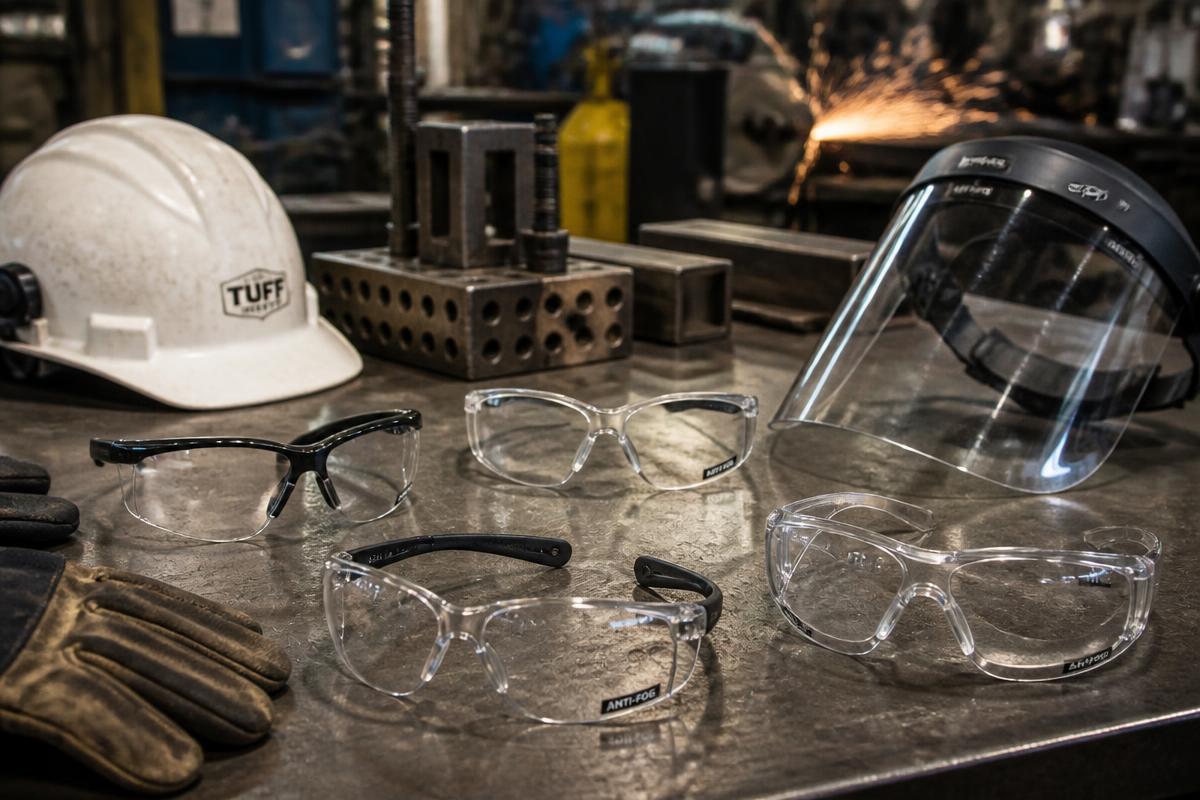
- Use a real anti-fog coating. Look for lenses tested to EN 166/168 "N" marking or manufacturer fog testing. Cheap "anti-fog" wipes wear off in hours; bonded coatings last the life of the lens.
- Fit matters. Gaps at the brow and temple let humid air in. A glass that sits close with soft nose pads fogs less and seals against particles better.
- Ventilation channels in the frame move air across the lens without letting debris in.
- Clean lenses correctly — with lens cleaner or water, never a dry shirt tail. Scratches trap moisture and reduce clarity.
Field rules
- Glasses go on before you cross the site line and stay on until you leave it.
- Grinding, chipping, or working over your head? Add a face shield over the glasses — a face shield alone is not eye protection.
- Prescription wearers need prescription safety glasses or fit-over goggles; regular glasses are not rated for impact.
Wrap-up
If your crew is pulling glasses off to see, that's an equipment problem, not an attitude problem. Tell us and we'll get you into a lens that stays clear.