Why we're talking about this
Fire Prevention Week is coming up next month, but fire safety on our job sites and shop floors can't wait for a calendar date. Hot work—grinding, welding, brazing, and cutting—remains one of the top causes of industrial and construction fires.
According to the National Fire Protection Association (NFPA), structure fires caused by hot work result in hundreds of injuries and tens of millions of dollars in direct property damage every year. Most of these fires start long after the torch is turned off because a stray spark smoldered unnoticed in combustible material.
What can go wrong
A single grinding spark can travel up to 35 feet and land in oily rags, wooden pallets, dry cardboard, or nearby fuel lines. If a hot work permit isn't issued, basic prep steps get skipped: nobody covers nearby drains, flammables aren't cleared, and nobody is assigned to watch the area.
Another major risk is relying on a fire extinguisher that hasn't been inspected or using the wrong technique when seconds count. If you panic and spray the top of the flames instead of the base, the fire will spread right over your head.
Field rules
- Obtain and post the permit: Before striking an arc or starting a torch, confirm a hot work permit is signed and posted. Inspect the 35-foot radius around your work area and clear or cover all combustibles.
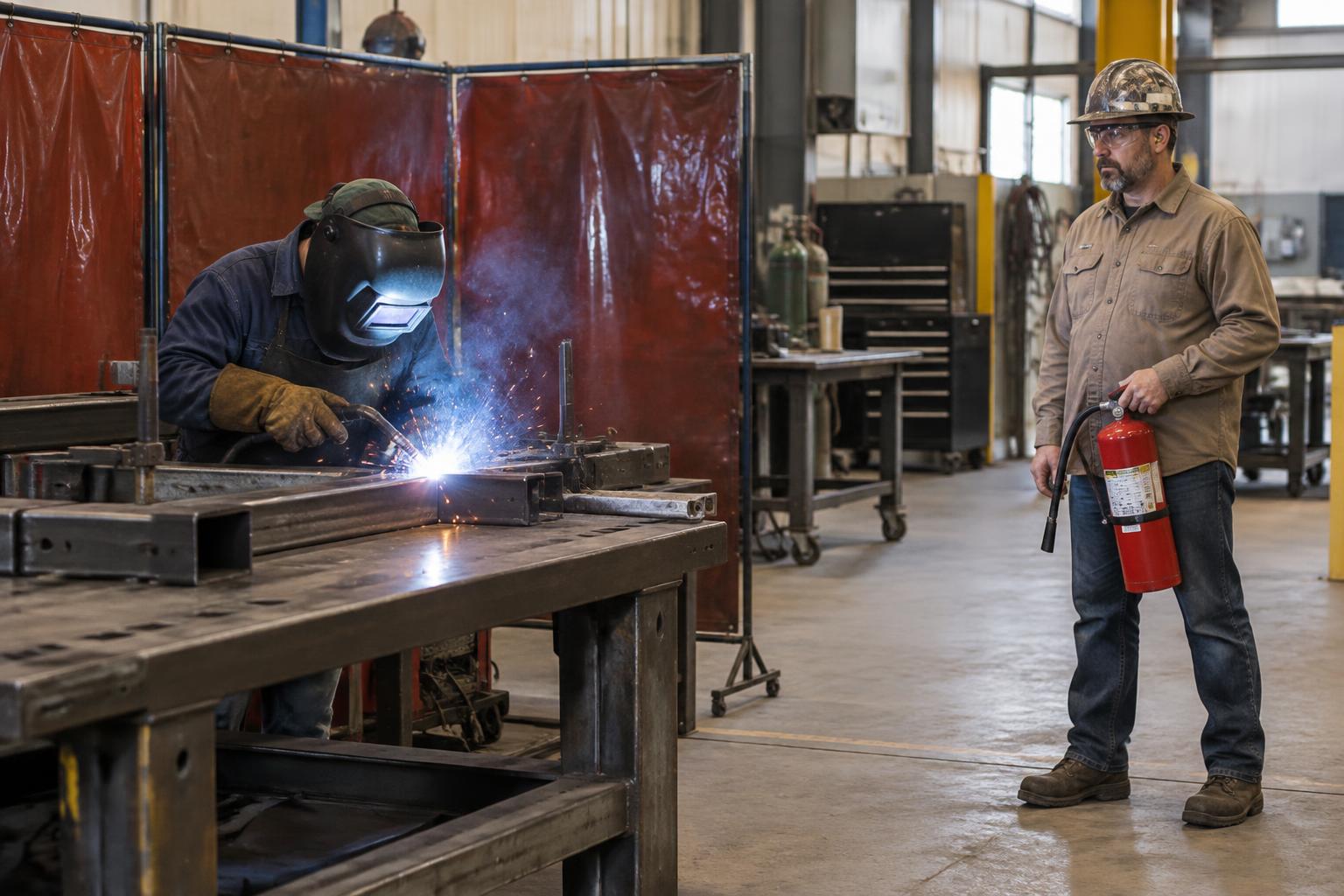
- Maintain a dedicated fire watch: Assign a trained worker to watch for sparks during the job and for at least 30 minutes after all hot work is completed.
- Keep extinguishers within reach: Have a fully charged, inspected ABC dry chemical extinguisher within 30 feet of any hot work activity.
- Remember the PASS method:
- P – Pull the pin to break the tamper seal.
- A – Aim low, pointing the nozzle at the base of the fire, not the flames.
- S – Squeeze the handle to discharge the extinguishing agent.
- S – Sweep side to side across the base of the fire until it is completely out.
- Know when to evacuate: Portable extinguishers are for small, early-stage fires only. If a fire is larger than a standard trash can or spreads past your escape route, evacuate immediately and call emergency services.
Wrap-up
Hot work permits and extinguisher training aren't just paperwork and protocol—they keep everyone on this site walking out the gate at the end of the shift. Take two minutes before starting any torch or grinder today to check your surrounding area and verify your extinguisher is charged. If your shop or rig needs fresh fire extinguishers, hot work blankets, or inspection tags, Firebrand Safety & Supply can help get your gear field-ready.