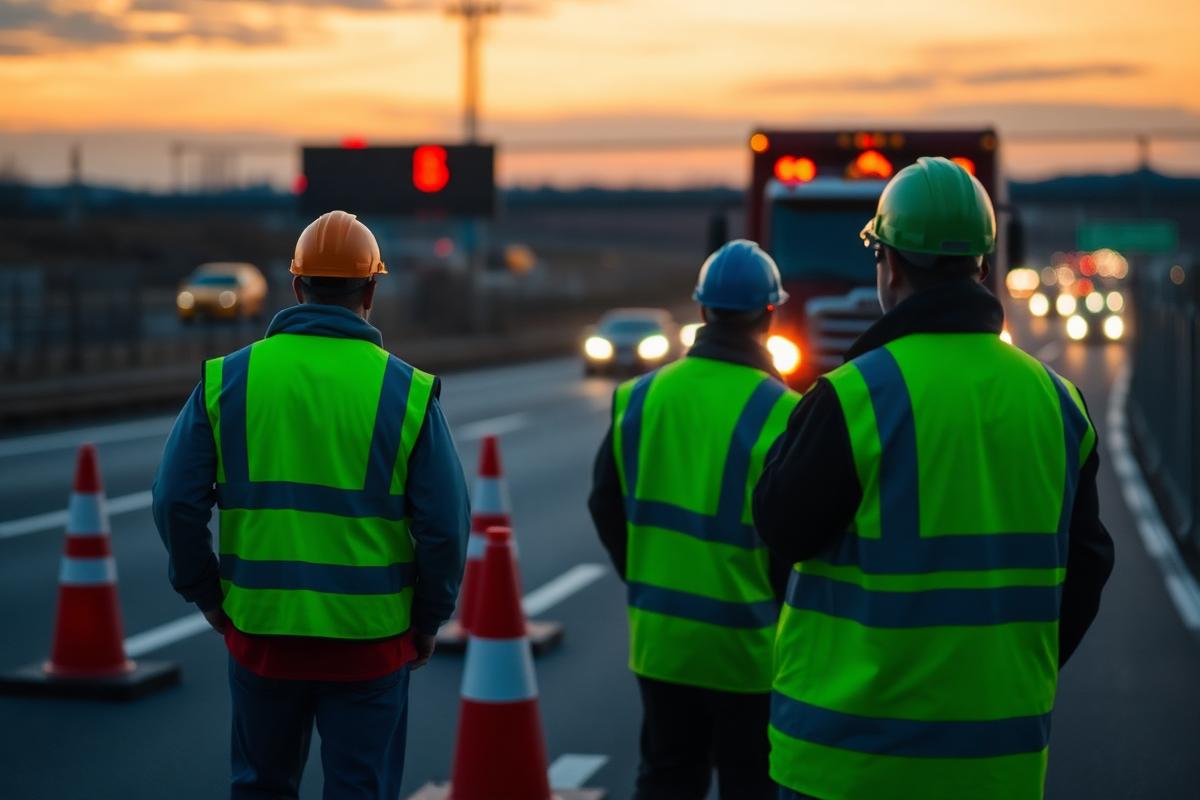
Why struck-by is the one to fear
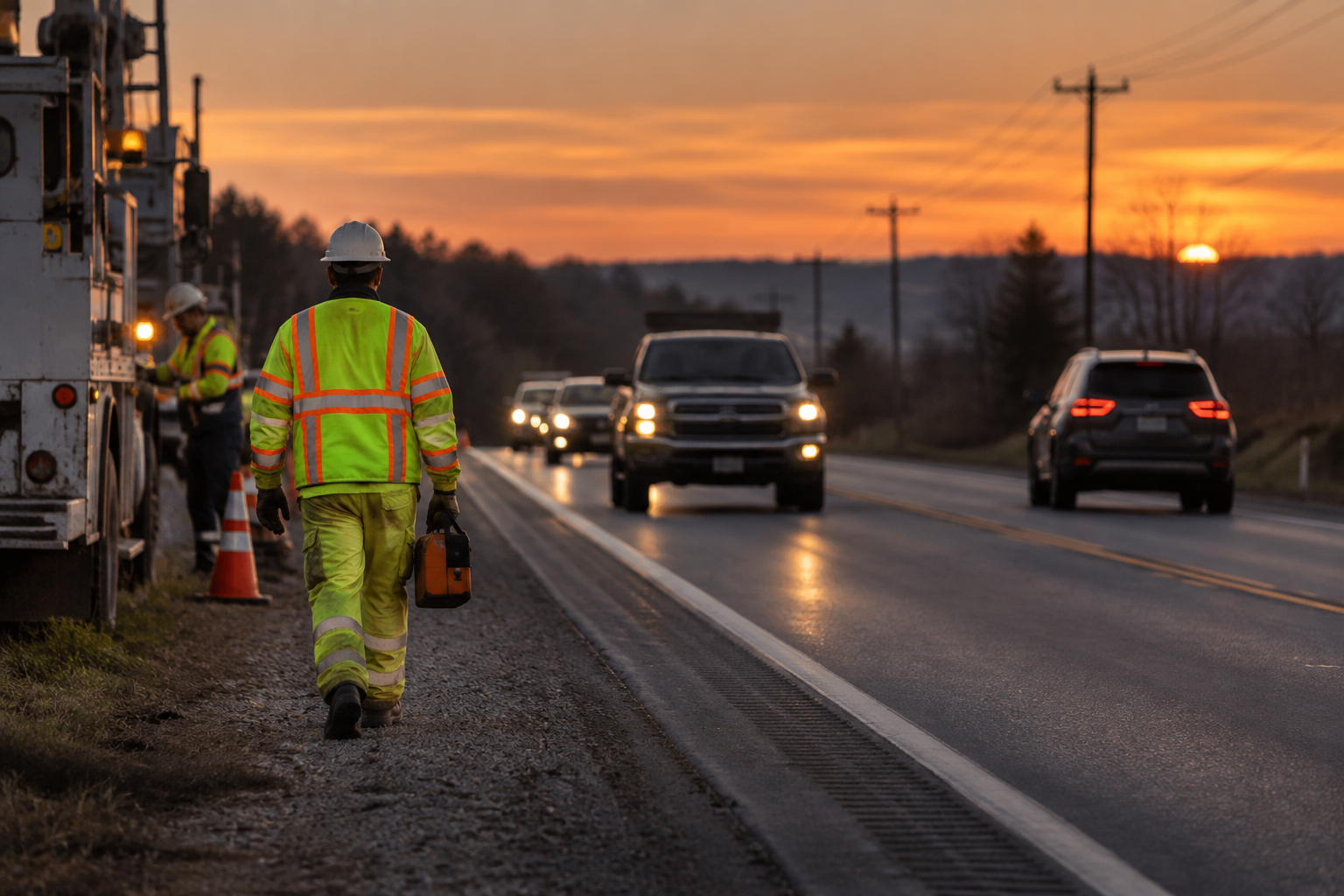
Struck-by incidents are the leading cause of death in highway work zones and a top-four killer across construction. The vehicle that hits you is usually going the speed limit, and the driver usually didn't see you until it was too late. Visibility is the whole game.
Wear the right class
- Class 2 (ANSI/ISEA 107) is the minimum for anyone working near traffic under 50 mph or in low-visibility conditions.
- Class 3 — sleeves and more reflective material — is required for traffic over 50 mph, night work, and anywhere the worker needs to be identifiable as a person from 1,280 feet.
- Class E pants turn a Class 2 top into a Class 3 ensemble.
- Faded, dirty, or torn hi-vis loses its rating. If the background material no longer looks fluorescent in daylight, replace it.
Positioning
- Face traffic whenever possible. If you must turn your back, have a spotter.
- Stay inside the protected area — behind the barrier or the truck-mounted attenuator (TMA). The buffer space exists to absorb the vehicle that isn't stopping.
- Never step backward without looking. Most on-site struck-by incidents involve your own equipment backing up.
- Have an escape route in mind at all times.
Equipment on site
- Backup alarms and cameras are not a substitute for eye contact with the operator.
- Spotters use standardized hand signals and stay visible to the operator at all times.
- At night: lighting, retroreflective vests, and reflective hard hat bands are all required, not optional.
Wrap-up
A driver has about two seconds to see you and react. Everything we do — the vest, the position, the buffer — is about buying those two seconds.