Why we're talking about this
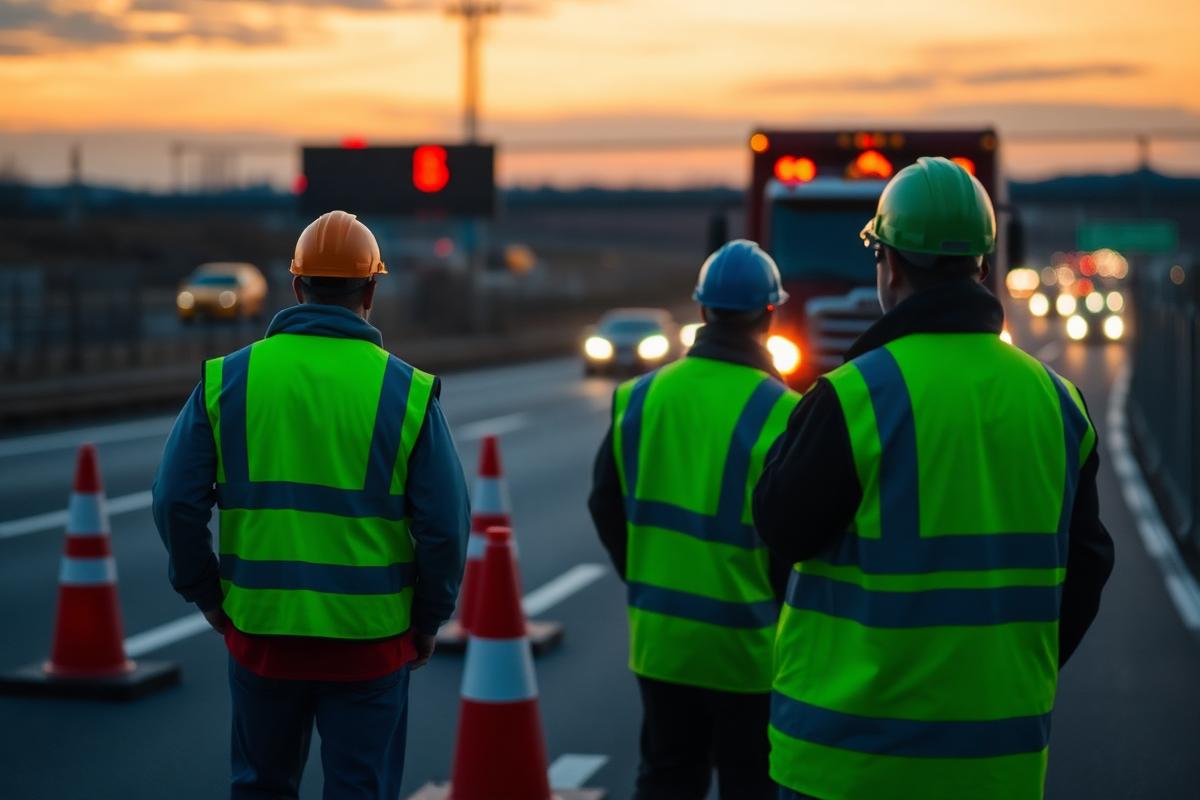
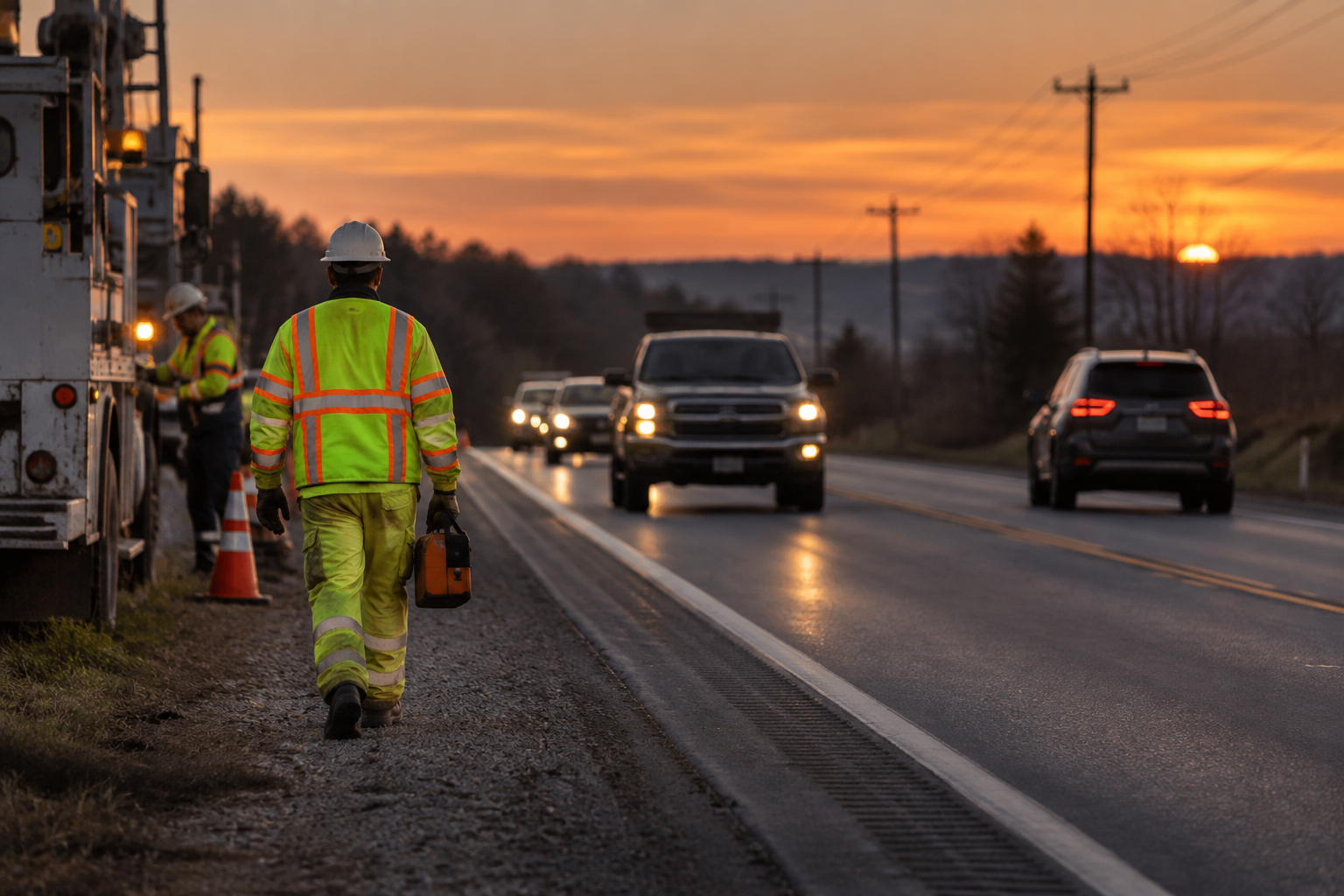
As we move into fall this September, more morning starts and evening callouts happen in low light. Fleet, municipal, and utility crews may be loading trucks, setting cones, or restoring service before drivers can clearly see them.
The danger is not just darkness. Low sun, glare, fog, and the change from a bright cab to a dim work area can hide a person, an open excavation, or equipment moving nearby. Seeing a vehicle does not mean its driver sees you.
What can go wrong
A worker in faded or dirty high-visibility clothing can blend into the roadside. A bright work light aimed toward traffic can blind approaching drivers while leaving the actual task in shadow. Behind a truck, even good reflective clothing may disappear from view.
At dawn and dusk, drivers may overestimate how far they can see. Dirty windshields scatter glare, and automatic lighting systems may leave rear lights off when only daytime running lights are operating. A familiar route still needs a fresh visibility check.
Field rules
- Check the site before work starts. Walk the access route and work area. Identify dark corners, uneven ground, open holes, and backing zones. Provide lighting before assigning work where crews cannot clearly see hazards. OSHA 1926.56 sets illumination requirements for construction operations; the required level depends on the area and task.
- Aim lights at the work—not into eyes. Position temporary lights to cover the task and approaches without dazzling drivers, operators, or spotters. Check for shadows behind equipment. Protect cords from traffic, water, and trip hazards. A headlamp supplements area lighting; it does not replace it.
- Inspect reflective gear. Use high-visibility apparel selected for the traffic exposure and applicable requirements. Fluorescent material helps in daylight; retroreflective material returns light toward its source in low light. Clean or replace garments with worn, obscured, or damaged material. Keep outer layers from covering it.
- Keep people separated from vehicles. Use the approved traffic-control setup and designated walking routes. Never treat a vest as permission to enter a travel lane. Stay out of blind spots and confirm communication before approaching equipment. Stop backing if the driver loses the spotter.
- Prepare the vehicle. Clean glass, mirrors, cameras, headlights, and rear lamps. Check lighting operation before departure. Use the proper headlight setting; do not assume daytime running lights illuminate the rear.
- Drive for what you can actually see. Reduce speed, increase following distance, and scan for roadside workers, pedestrians, and stopped equipment. Avoid high beams in fog. If visibility becomes unsafe, get to a safe location off the travel lane and stop.
Wrap-up
Before we roll, name today's darkest work area and who will check its lighting. Fix visibility problems before anyone steps into traffic or starts equipment.