Why we're talking about winter in September
The first icy morning of the year produces more slip injuries than any other day of winter. Nobody has their cleats yet, nobody has salted the yard, and everyone walks like it's still fall. Planning now means the gear is in the truck when that morning comes.
What a winter fall costs
- Fractured wrists, hips, and tailbones are the typical injuries — weeks of lost time each.
- One workers' comp claim for a slip-and-fall can exceed the cost of outfitting an entire crew with traction devices for a decade.
- OSHA's walking-working surfaces rule (1910.22) requires employers to keep surfaces free of hazards including snow and ice — as far as feasible.
Traction devices
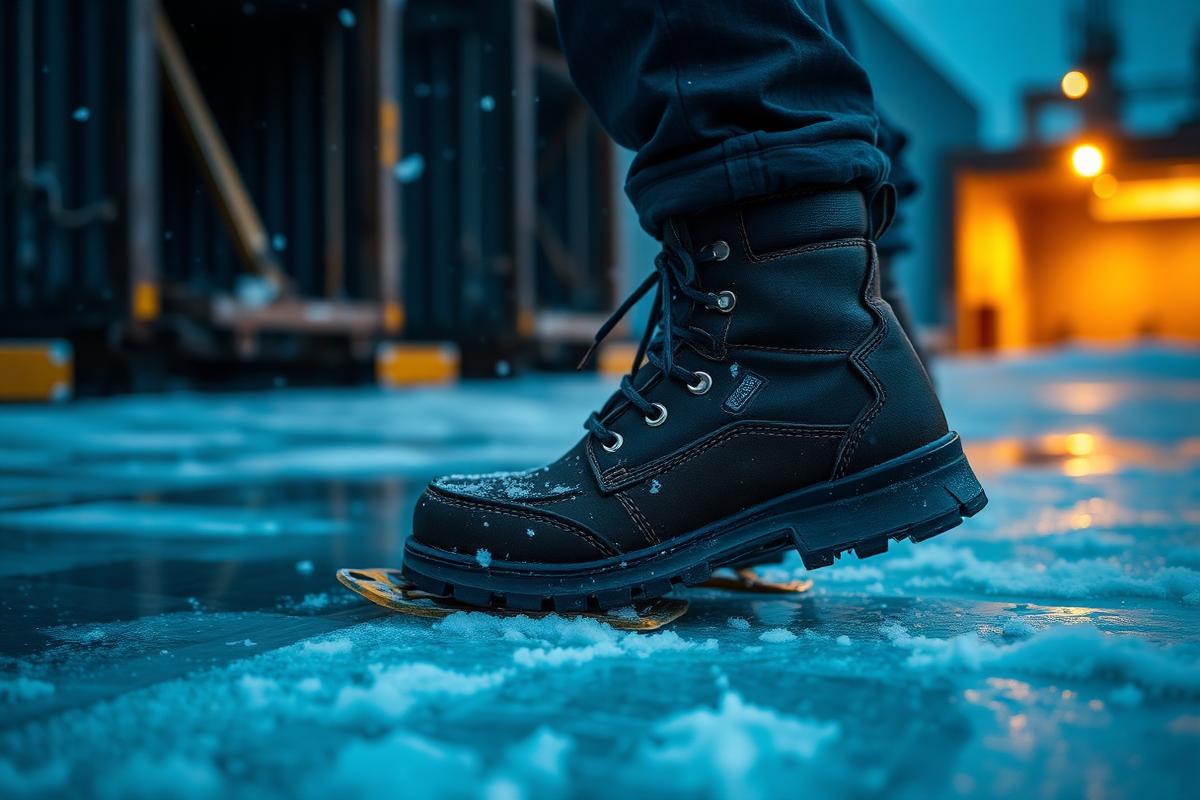
- Coil-style ice cleats (like Polar Paw) stretch over the boot and use stainless coils for traction on ice and packed snow. Good for crews that move between vehicle and ground all day.
- Spike-style grip better on sheer ice but are awkward on bare concrete and dangerous on ladders and metal steps — take them off before climbing.
- Whatever you use, it has to be on the boot, not in the cab. Make putting them on part of stepping out of the truck.
Walking on ice
- Short, flat steps — the "penguin walk." Keep weight over your front foot.
- Hands out of pockets, free to catch yourself.
- Use three points of contact on truck steps and equipment — these are the most common winter fall locations.
- Assume every dark patch is ice.
Site controls
- Stock ice melt and shovels before the first freeze, not after.
- Identify the shaded spots and drainage areas that ice first and treat them proactively.
- Report untreated areas — don't just walk around them.
Wrap-up
Winter gear ordered in September is on the boot in November. Talk to your supervisor this week about what the crew needs.