Why we're talking about this
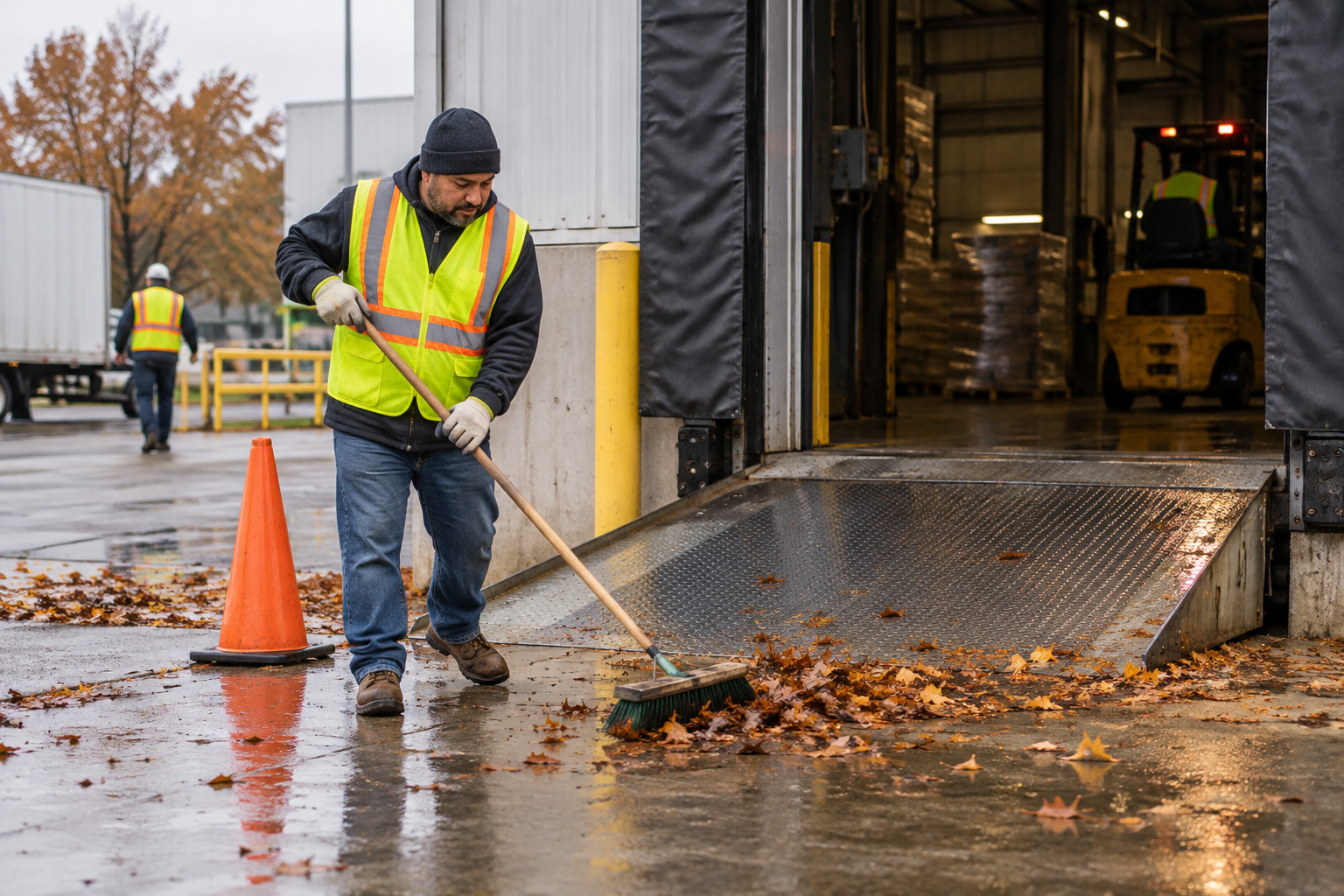
October leaf buildup can turn an ordinary walking route into a slip hazard overnight. Rain, dew, and truck tires press leaves into a slick layer. That layer can hide mud, damaged pavement, or the edge of a dock plate.
For municipal, fleet, and construction crews, the trouble spots are familiar: yard entrances, truck steps, temporary ramps, loading docks, and pedestrian routes beside leaf piles. Before the first load moves today, we need a clear route and reliable footing—not just a reminder to be careful.
What can go wrong
A leaf-covered ramp adds downhill force to poor traction. Carrying tools or pushing a loaded cart makes it harder to recover when a foot slides. The cart can also run away or pull the worker off balance.
Metal dock plates can stay slick even after the visible leaves are removed. Packed leaf residue, water, oil, and worn traction surfaces all matter. A slip at the dock edge can become a fall to the level below or put someone in the path of moving equipment.
Traction is only part of dock safety. A plate that is damaged, incorrectly seated, unsecured, or unsuitable for the load can shift or fail. Never assume a portable plate is rated for a forklift just because it bridges the gap.
Field rules
- Inspect the route before traffic starts. Check ramps, dock plates, truck steps, landings, and transitions between pavement and metal. Look for wet leaves, residue, standing water, loose edges, and poor lighting. Recheck after rain, leaf collection, or vehicle traffic brings debris back.
- Remove the hazard, not just the top layer. Block off the affected route while cleaning. Remove leaves with tools suited to the area, then address remaining slime or mud. Do not blow debris into another walkway, under equipment, or into drains. If safe traction cannot be restored, keep the route closed and report it.
- Check the ramp or dock plate itself. Verify condition, proper seating, securement, and capacity for the intended equipment and total load. Before loading, confirm the vehicle is secured against movement under the site's restraint or wheel-chocking procedure. Stop if anything shifts or looks wrong.
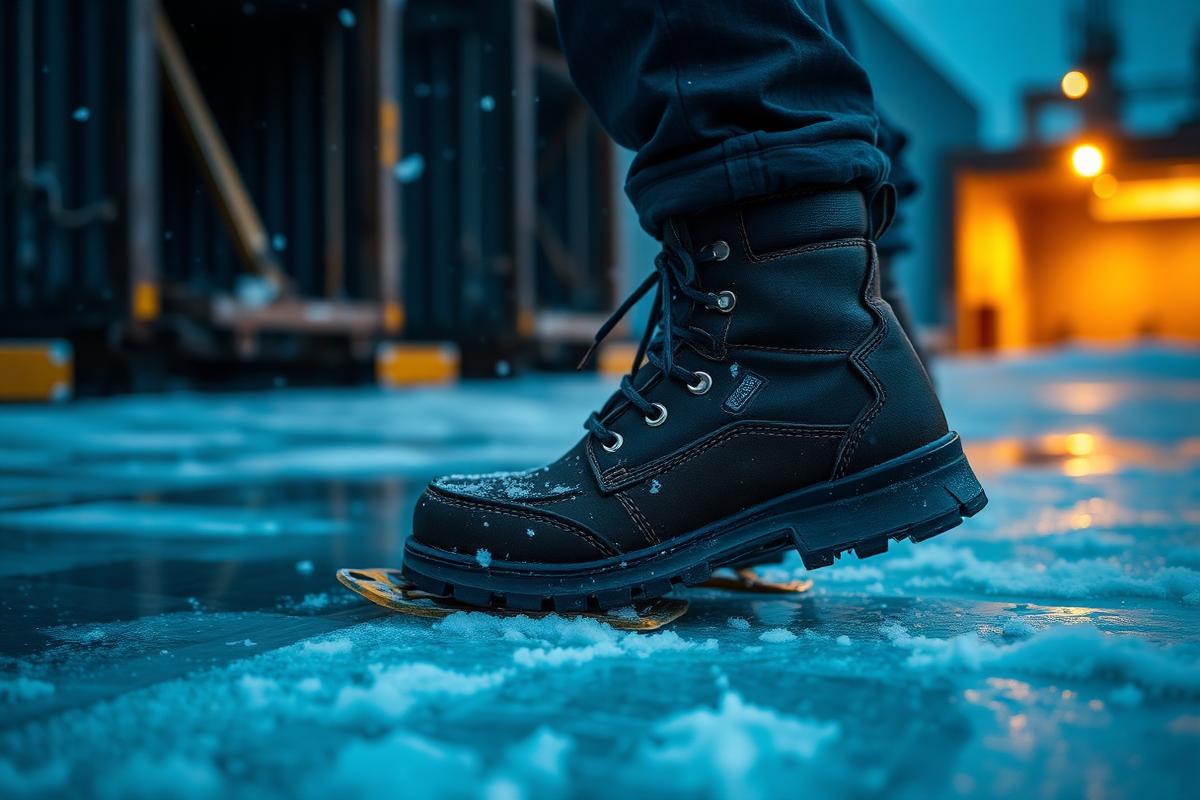
- Use footwear and movement that support traction. Wear slip-resistant work footwear suited to the surface; clean packed leaves and mud from the tread. Take short, controlled steps. Use handrails where provided, and keep loads low enough to see your route. Footwear does not make a contaminated ramp safe.
- Control traffic and loads. Keep pedestrians clear of active loading equipment. Use a clear alternate route when available. Do not push or pull a load onto a slippery slope hoping momentum will get it across.
Wrap-up
Before we start, identify today's slickest ramp or dock approach and assign someone to inspect and clear it. If the surface or plate is not safe, close the route until the problem is corrected.