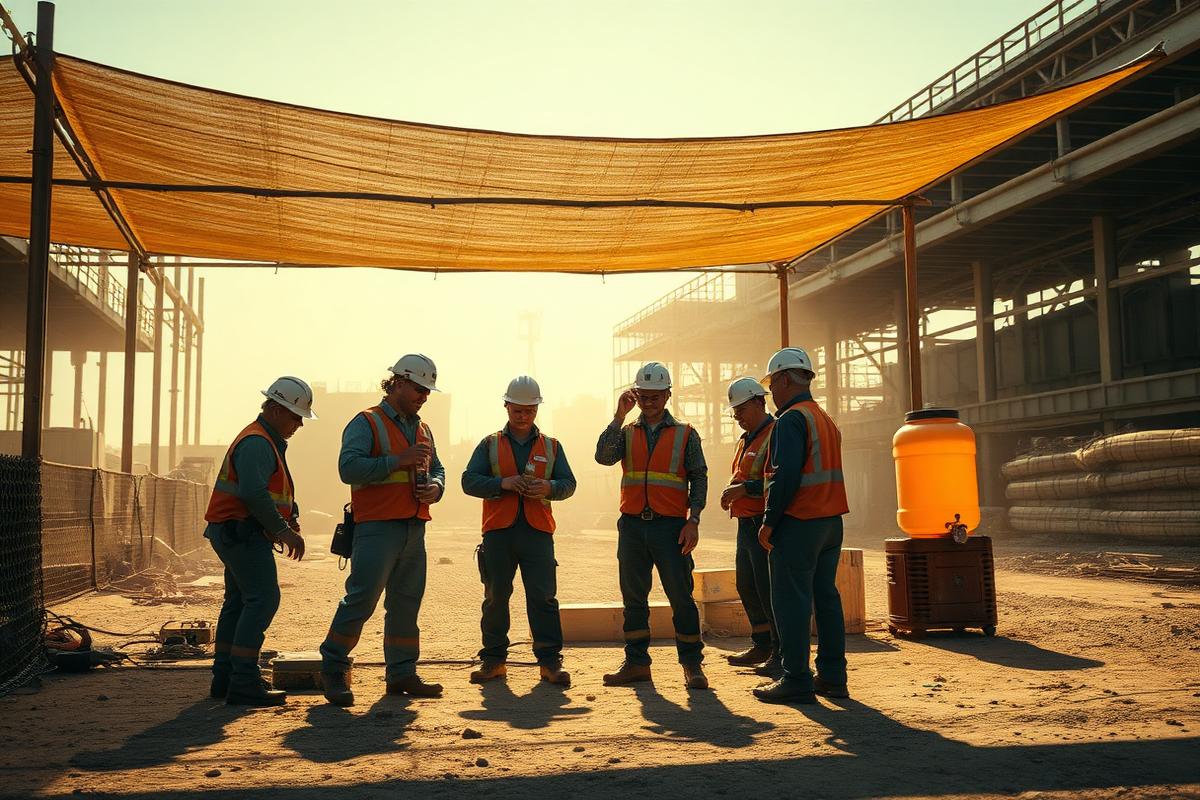
Why late summer is risky
Crews are most careful about heat in June. By late August and September, the water cooler doesn't get filled as often, breaks get skipped to make up schedule, and a run of cooler mornings makes people forget the afternoon will still hit 95°F. New hires and people returning from time off have lost their heat acclimatization and are at the highest risk.
Know the signs
Heat exhaustion — heavy sweating, weakness, headache, nausea, dizziness, cool clammy skin. Action: stop work, move to shade or AC, loosen clothing, sip water, cool with wet cloths. If not improving in 15 minutes, call for medical help.
Heat stroke — confusion, slurred speech, hot skin (may or may not be sweating), seizures, loss of consciousness. This is a medical emergency. Action: call 911 immediately, move to shade, cool aggressively with water and ice on neck, armpits and groin. Don't wait to see if they improve.
Field rules
- Water, rest, shade. One cup of water every 15–20 minutes. Don't wait until you're thirsty.
- Schedule heavy work for the coolest part of the day when possible.
- Use the buddy system — heat stroke victims usually don't recognize their own symptoms.
- New and returning workers work reduced exposure for the first week (20% day one, adding 20% each day).
- Cooling PPE — evaporative neck wraps, cooling vests, and ventilated hard hats — reduces core temperature measurably.
Wrap-up
The person most at risk today is the one who says they're fine. Watch each other.